2026-08-29 ·
Water Heater Leak Repair: What San Francisco Homeowners Should Do First
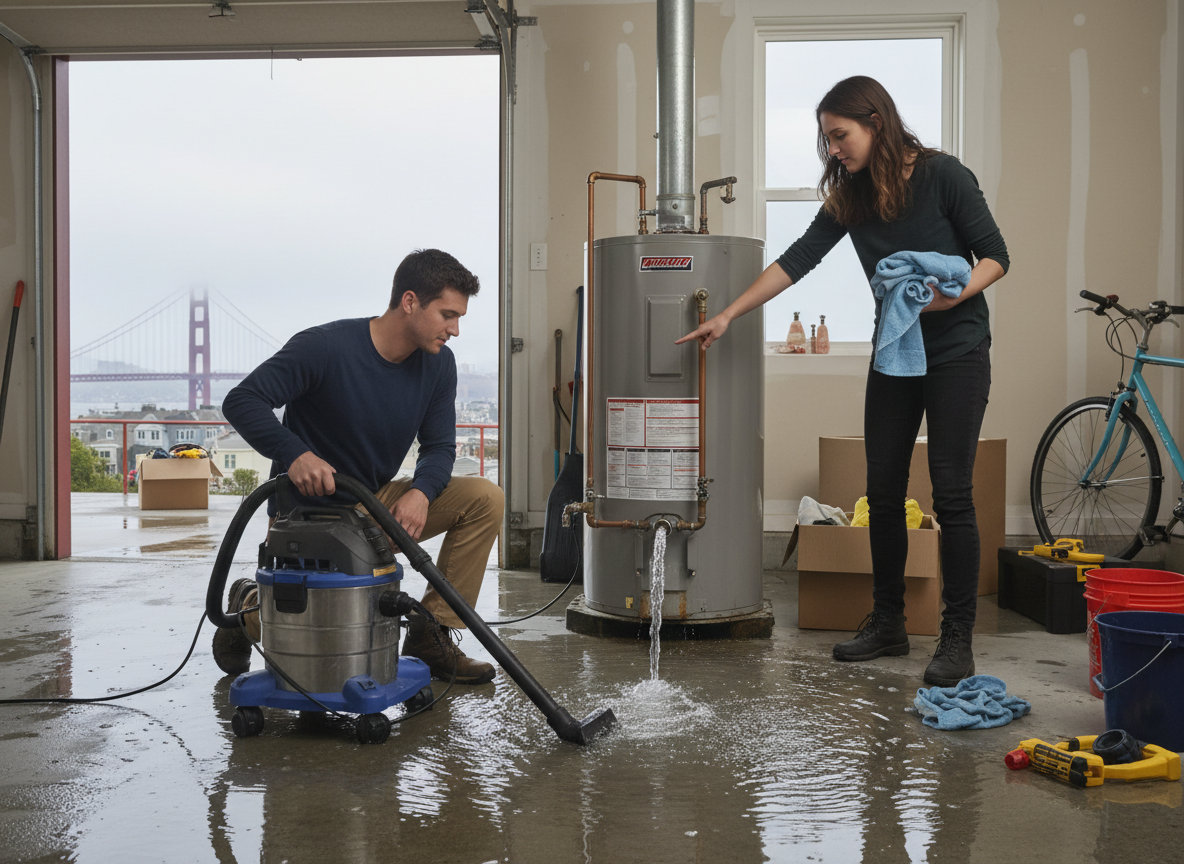
When you find a water heater leak in your San Francisco home, shut off the cold water inlet valve right away and cut power or gas to the unit to stop the flow and reduce risk of electrical issues or flooding.
Shut Off Supply Lines and Power Sources
In San Francisco's older housing stock, especially Victorians and Edwardians common in the Castro and Haight-Ashbury, water heater leaks often stem from corroded pipes or tank seams weakened by decades of use. Start by locating the cold water shutoff, usually above or beside the heater, and turn it clockwise until tight. Next, flip the circuit breaker or close the gas valve to prevent hazards. The city's mild Mediterranean climate brings wet winters that increase indoor humidity and accelerate rust on metal components, so acting fast limits water damage to floors and nearby walls. Homeowners in the Sunset District or Richmond District frequently deal with these issues because salt air from the Pacific speeds corrosion on exposed fittings. Always check for standing water before stepping close, and keep a bucket or towels ready to catch drips during shutdown.
Identify the Leak Location and Type
Once supply is isolated, examine the heater for the exact source, whether at the temperature-pressure relief valve, inlet connections, or bottom seam. In neighborhoods like North Beach and Chinatown, where many units sit in tight utility closets of multi-unit buildings, leaks can travel along floors and affect units below. Wet winters exacerbate small drips by raising moisture levels that promote further corrosion on anode rods and nipples. Measure the puddle size and note if water appears rusty or clear to help describe the issue later. San Francisco's hilly terrain in areas like Russian Hill or Nob Hill means some homes have heaters on upper levels, so leaks can cascade quickly down stairwells. Document the model number and age if visible, since units in Pacific Heights homes often reach 8–12 years before seam failures appear.
Protect Your Property and Monitor Conditions
Move valuables and place absorbent materials around the base while the unit drains slowly through any open valves. In the Financial District or Marina District, where space is tight, quick containment prevents water from reaching electrical outlets or neighboring units. The region's cool summers keep indoor temperatures stable but do not offset the pipe stress from winter rains that can worsen existing leaks. Avoid attempting makeshift seals on active drips, as pressure changes in older galvanized lines common throughout San Francisco can cause sudden bursts. Check nearby areas like the basement or crawlspace for hidden moisture that might reach the foundation. Residents near Golden Gate Park sometimes notice leaks worsen after heavy rains because soil saturation affects drainage around building perimeters.
Know When Professional Help Is Required
If the leak continues after shutoff or you smell gas, contact a technician immediately rather than attempting further DIY steps. San Francisco's dense neighborhoods mean response times matter, especially during wet winter months when multiple homes report issues simultaneously. For ongoing problems in the Mission District, review water heater leak repair details that cover common valve and fitting fixes. Homeowners facing repeated leaks may also explore water heater repair options suited to local water conditions. If your unit is a tankless model, see the guide on tankless water heater repair in San Francisco for specific diagnostics. The business provides Mon–Sun 24/7 emergency service to address these situations across the county and nearby cities like Oakland and Daly City.