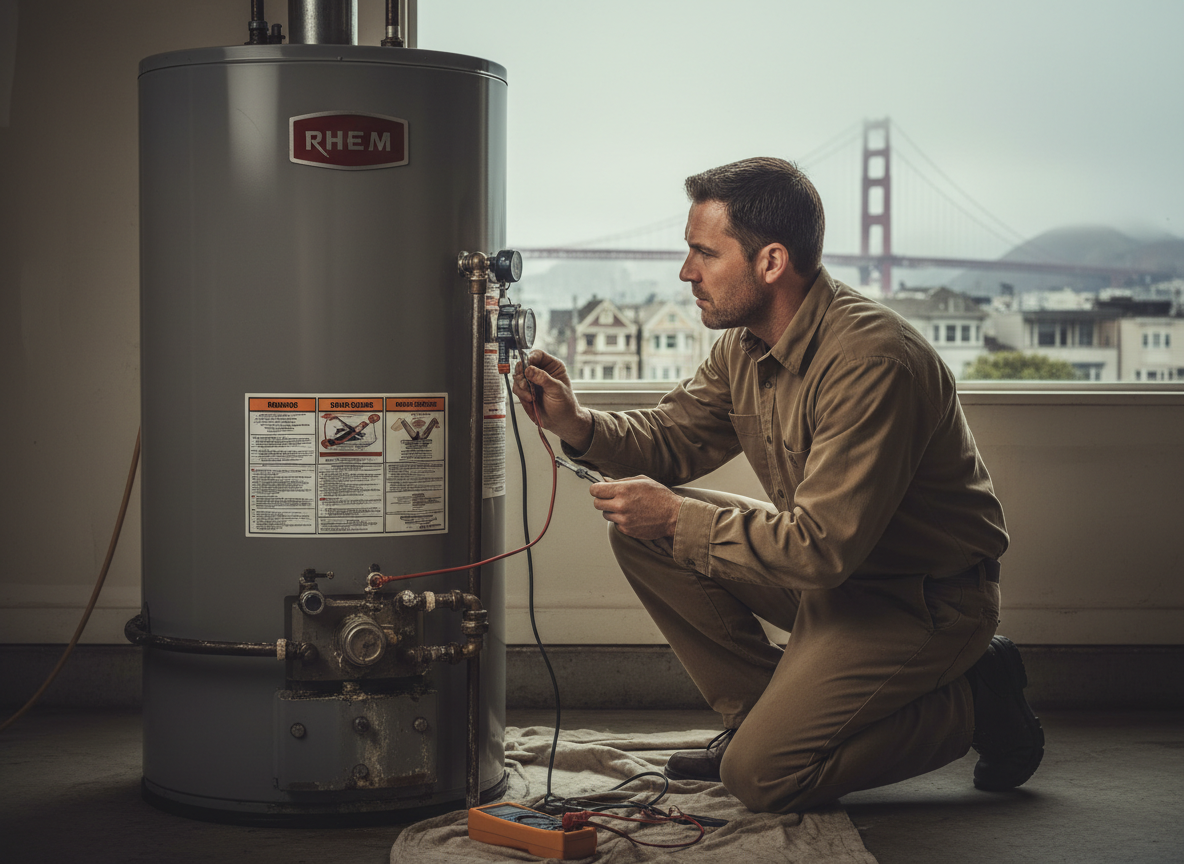
Mission District homes often sit in dense blocks of early 1900s Victorians and Edwardians where water heaters are tucked into narrow closets or crawlspaces under the first floor. Tight lots and shared walls mean technicians must carry parts through side alleys or up steep interior stairs rather than using driveways. Wet winters bring extra calls for leaks when older tanks corrode faster from constant moisture.
Residents along Mission Street and around Dolores Park face the same seasonal pattern each year once rains start. Ground-floor units near the BART tracks see more sediment buildup from city water pressure swings. Crews familiar with these blocks know which buildings still run on original galvanized lines and plan extra time for access and shutoff valve work.
Service runs from the flat blocks near Cesar Chavez Street up the slight rise toward 24th Street. Emergency calls often come from apartment buildings where a single leaking unit can affect multiple floors. Local knowledge of parking restrictions and one-way alleys keeps response times short even during evening or weekend hours.
Around Mission District
We regularly work near:
- 📍Dolores Park
- 📍Balmy Alley
- 📍24th Street Mission BART Station
- 📍Mission Street
- 📍Cesar Chavez Street
- 📍Mission Cultural Center for Latino Arts
Water Heater Repair in Mission District — Local Notes
- •Many Mission District Victorians have water heaters installed in basement corners with only 24-inch access paths, requiring disassembly of surrounding pipes before replacement.
- •Winter rains increase leak frequency in ground-floor units along Mission Street where older tanks sit directly on concrete slabs with poor drainage.
- •Narrow lots between 16th and 24th Streets limit equipment staging, so crews often stage parts on the sidewalk and carry tanks through interior hallways.
- •Proximity to the 24th Street Mission BART station means frequent calls from buildings with shared water mains that lose pressure during peak evening use.