2026-08-29 ·
Thermostat Issues on Your Water Heater? A San Francisco Repair Guide
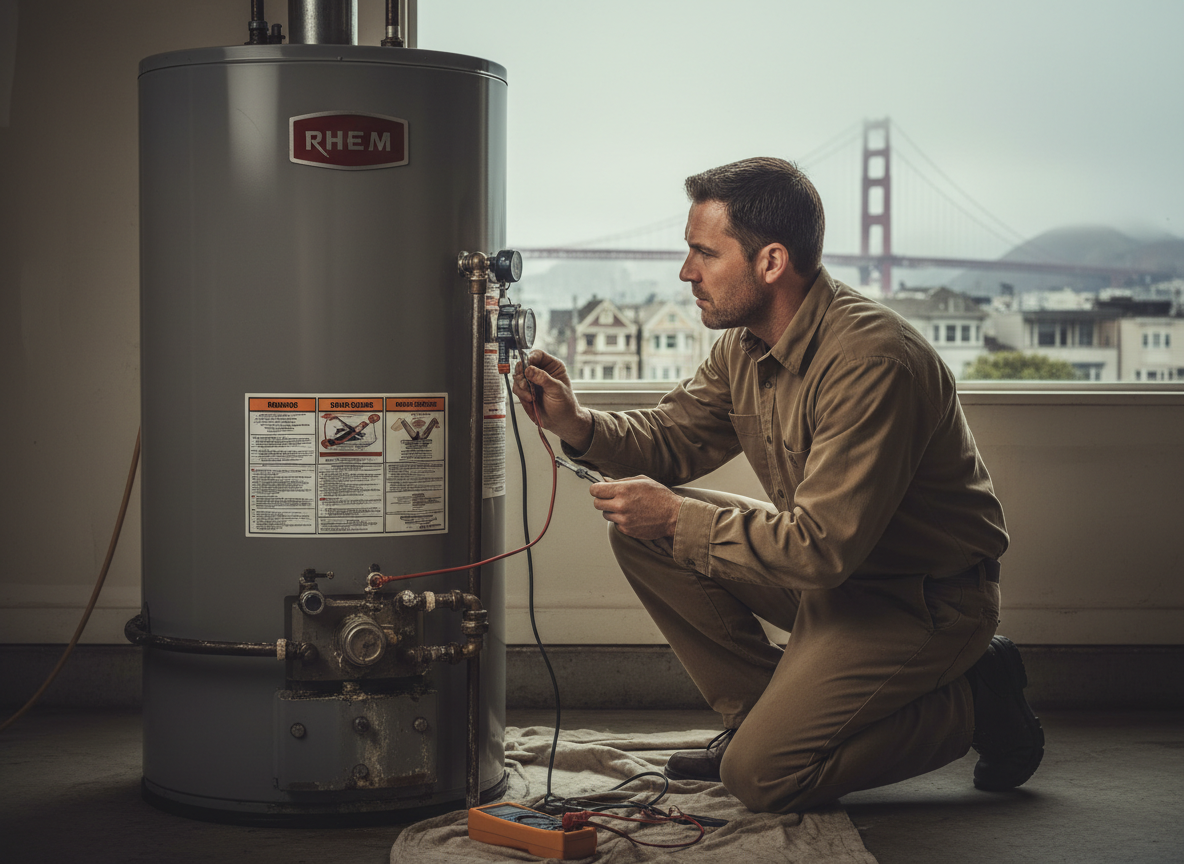
Thermostat failure on a water heater in San Francisco typically shows up as water that stays lukewarm or swings between hot and cold, and the first step is to check the upper and lower elements after confirming power at the unit. Many homes built before 1950 in neighborhoods such as the Mission District and Haight-Ashbury still use 40- or 50-gallon tanks where sediment from wet winters accelerates wear on the thermostat contacts. Testing with a multimeter usually reveals whether the thermostat needs replacement or simply recalibration.
Common Thermostat Problems in San Francisco Housing Stock
San Francisco's older housing stock, especially Victorians and Edwardians in the Castro and North Beach, places water heaters in tight closets or basements where limited airflow lets heat build up around the thermostat. Cool summers reduce overall demand, yet the wet winters bring higher humidity that corrodes wiring terminals over time. Homeowners often notice the pilot light stays lit but the burner cycles too frequently because the thermostat no longer reads tank temperature accurately. In the Richmond District and Sunset District, salt air from the Pacific adds another layer of corrosion on exposed connections. These conditions shorten the reliable life of mechanical thermostats compared with inland homes in nearby Daly City or Oakland.
How Local Climate and Terrain Influence Thermostat Performance
The mild Mediterranean climate keeps summer water inlet temperatures stable, yet winter rains increase groundwater moisture that can seep into crawl spaces and affect lower thermostats on tanks sitting directly on concrete slabs. Steep streets in Russian Hill and Pacific Heights mean some homes have water heaters installed at odd angles, which shifts the temperature-sensing bulb away from the hottest water layer. This placement error causes the thermostat to call for heat longer than needed, raising energy use. Residents in Chinatown and Nob Hill frequently report faster scale formation because older galvanized pipes deliver harder water that insulates the thermostat sensor.
Step-by-Step Troubleshooting Before Replacement
Turn off power at the breaker, remove the access panels, and use a multimeter to test continuity across the thermostat terminals at the temperature setting marked on the dial. If the reading shows open circuit when the tank is below the set point, the thermostat has failed. Next, drain several gallons from the tank to check for sediment that may have packed around the sensor; flushing with a garden hose often restores function temporarily. Always verify the high-limit switch has not tripped first, since that safety device can mimic thermostat symptoms. Homeowners in the Marina District should also inspect for seismic strapping that may have shifted during minor tremors and pulled wires loose.
When Professional Thermostat Repair Makes Sense
If the tank is more than eight years old or shows signs of corrosion on the exterior, replacing just the thermostat may not be the most cost-effective choice compared with full water heater repair. A technician can swap the upper and lower units, recalibrate both, and test recovery time under actual household load. For homes considering upgrades, thermostat repair often pairs with checking the dip tube and anode rod in one visit. In the Financial District and surrounding high-rises, licensed plumbers also confirm seismic shut-off valves remain functional after any work.
Preventing Repeat Failures in Wet Winters
Flushing the tank twice a year removes the mineral layer that insulates the thermostat and shortens its life. Installing a whole-house water softener helps in areas served by older mains, while dielectric unions prevent galvanic corrosion at the connections. Scheduling service before the first heavy rains of winter catches issues early. For readers dealing with active leaks alongside temperature problems, the steps in Water Heater Leak Repair: What San Francisco Homeowners Should Do First provide the immediate safety sequence. San Francisco Water Heater Repair provides 24/7 emergency service every day of the week when sudden thermostat failure leaves a household without hot water.